Leverage the capabilities of generative AI, digital twins, and knowledge engineering for faster design, optimization, and validation of products even in the early stages of development.
CATIA helps engineers and development teams explore more solution variants, work with complex requirements, and design products considering performance, cost, sustainability, and time to market.

Generative AI in engineering is not just about automatically creating shapes. It is a new way of working that combines requirements, constraints, calculations, simulations, corporate know-how, and team experiences.
Faster exploration of various design options based on specified parameters, constraints, and target performance.
Finding solutions with better stiffness, weight, strength, efficiency, or manufacturability.
Supporting decision-making in the conceptual phase when design changes have the greatest impact on the final product.
CATIA allows for the creation and comparison of design alternatives based on technical requirements. This enables teams to focus on solutions that meet requirements for functionality, weight, strength, material usage, and manufacturing constraints.
Topological optimization of parts and assemblies for lighter and more efficient designs.
Evaluation of body, chassis, load-bearing structures, or composite elements variants.
Better decision-making in the early stages of development when costs and technical parameters can be influenced.
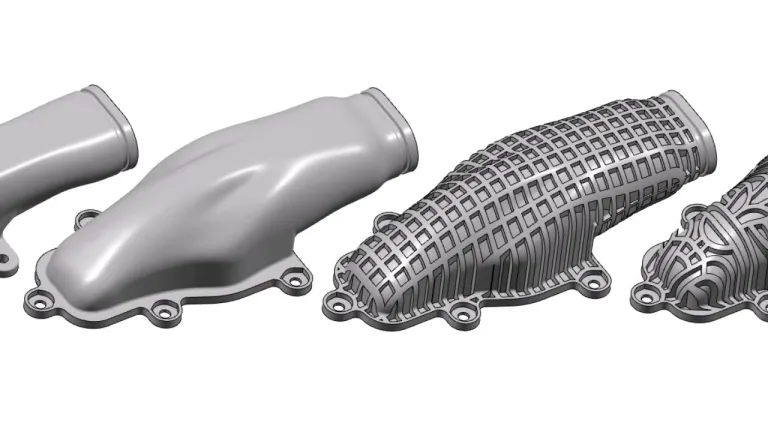
CATIA Visual Scripting helps create complex shapes, repeatable patterns, and intelligent models using a visual, no-code approach. Designers can thus expand design possibilities without the need for traditional programming.
Automation of repetitive design processes and parametric variants.
Faster creation of complex surfaces, structures, patterns, and design details.
Better collaboration between design, engineering, simulation, and manufacturing.
When CATIA, data, simulations, and company knowledge are connected, an environment is created where products can be designed, validated, and optimized even before a physical prototype is created.
Optimization of chassis, body, lightweight structures, platform solutions, and complex vehicle systems.
More efficient design of machine units, assemblies, load-bearing structures, and modular product solutions.
Support for the design of lightweight structures, composite parts, precise surfaces, and technically demanding components.
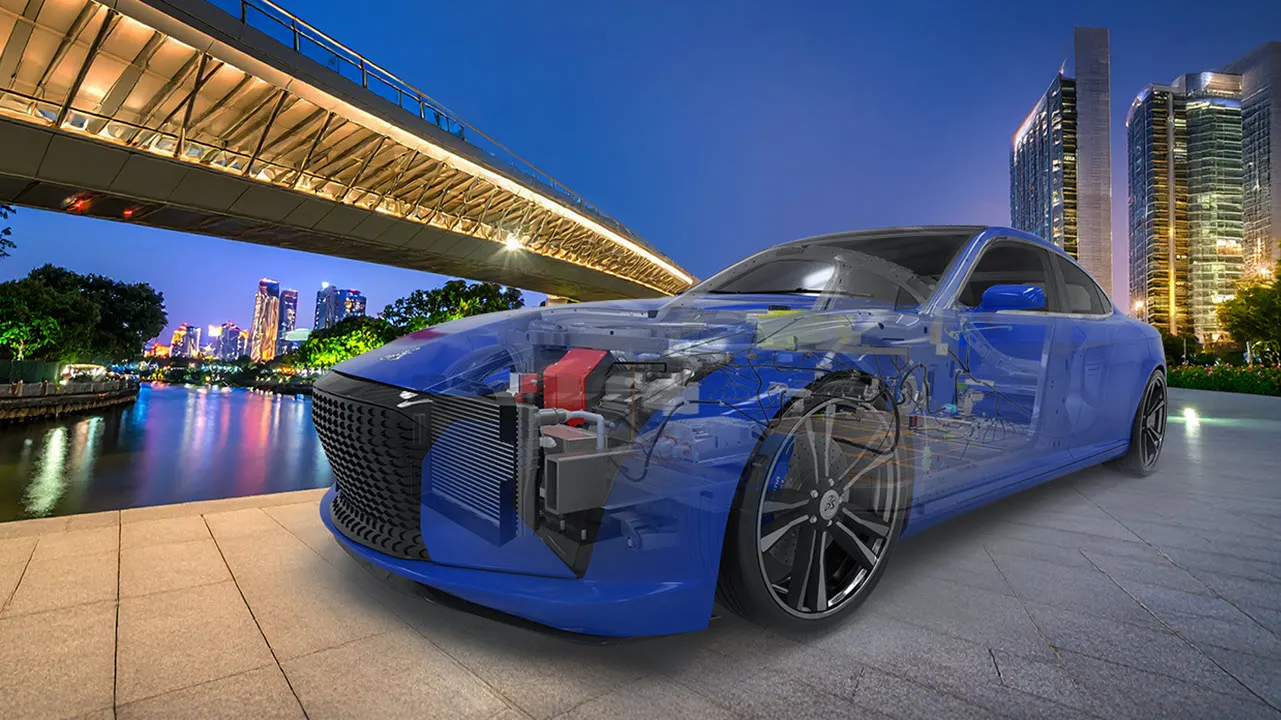
It is a design approach where software helps generate, compare, and optimize various solution variants based on specified technical requirements.
No. AI serves as support for faster variant searching, option analysis, and decision-making. The responsibility for design, solution selection, and technical correctness remains with the expert team.
Not necessarily. The benefits depend mainly on the type of product, complexity of development, number of variants, and optimization requirements. TECHNODAT can help you assess the appropriate deployment scenario.
Connect with TECHNODAT experts. We will help you find practical applications of CATIA, 3DEXPERIENCE, and digital twins for your design and development processes.



